 Written and medically reviewed by
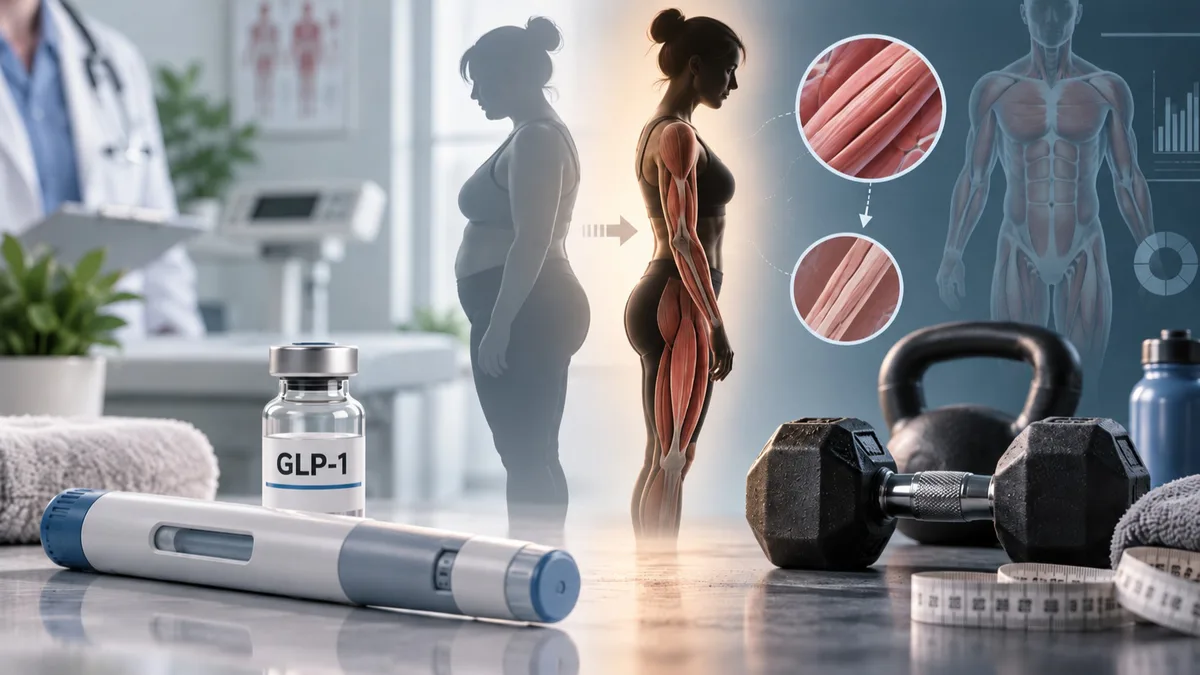
Picture this: the number on the bathroom scale finally drops the way you hoped, yet the jar of pickles in the fridge suddenly feels heavier than it used to, and the stairs leave you more winded than before. That mismatch between weight loss and strength loss is exactly what happens when GLP-1 muscle loss sneaks into the picture. Medications like semaglutide and tirzepatide are remarkably good at quieting appetite, and when portions shrink dramatically without a plan for protein or movement, a surprising share of what comes off the body can be muscle rather than fat. Add in sarcopenia, the muscle decline that starts creeping in around age 30 long before anyone notices, and the risk compounds. Below, we unpack what is happening physiologically, what the research on these medications suggests, and the concrete steps that help keep weight loss aimed at fat instead of strength.
Sarcopenia: The Muscle Decline That Starts Long Before You Notice
Most people picture sarcopenia as something that shows up in your eighties, a grandparent who struggles to open a jar. In truth, the muscle loss that defines sarcopenia is already underway well before retirement. Research generally points to a loss of around 3 to 5 percent of muscle mass per decade beginning near age 30, with the pace picking up noticeably once you pass 60. Because none of this registers as a dramatic event, the scale can stay flat for years while functional strength is already eroding underneath, which is part of why clinicians sometimes call it a silent process.
Muscle does far more than shape how your arms look in a t-shirt. It is active tissue that helps regulate blood sugar, cushions joints, drives metabolic rate, and underlies your ability to carry groceries or climb a ladder without a second thought. Stack a fast, low-calorie stretch of weight loss on top of a body that is already drifting toward sarcopenia, and you have two separate forces pulling against lean tissue at the same moment.
Why GLP-1 Medications Can Tip the Scale Toward Muscle Loss
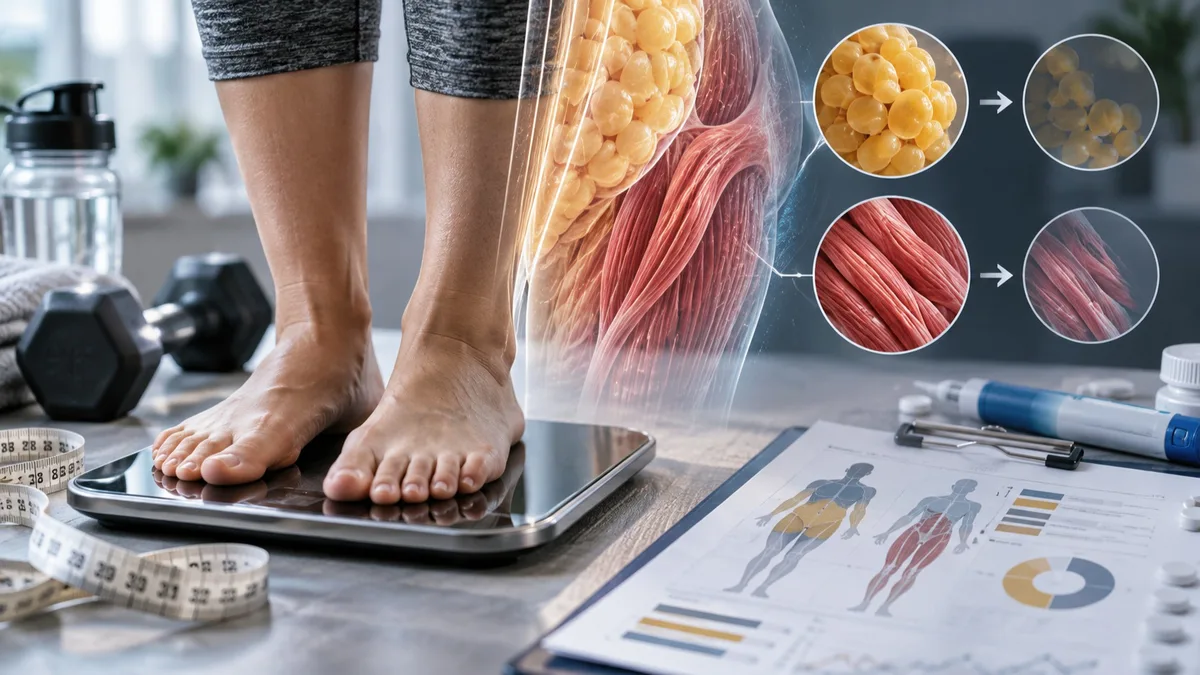
Compounded semaglutide and tirzepatide, like their brand-name counterparts, slow stomach emptying and turn down appetite signals coming from the brain. That is usually exactly what a patient wants: smaller plates feel like plenty, cravings fade into the background, and daily calorie totals fall substantially without a fight. The complication is that the body does not divide a calorie deficit evenly between fat stores and muscle tissue. Whenever intake drops quickly and by a wide margin, some portion of the weight shed comes from lean mass, and research on GLP-1 therapies has found that a meaningful slice of total weight lost can be muscle rather than fat, especially when protein and physical activity are not adjusted to compensate.
None of this means losing muscle is a foregone conclusion, or that the medication itself is working against you. It simply means that suppressing appetite removes one obstacle, cravings and constant hunger, while leaving the responsibility for what fills the plate squarely with the patient. A person surviving on a small daily calorie total of mostly bread and crackers will lose lean tissue at a very different rate than someone eating the same calorie total built around lean protein while still lifting something heavy twice a week.
The Injection Isn't a Substitute for a Plan
A common misunderstanding around semaglutide and tirzepatide is the assumption that starting the medication means the rest of the work happens automatically. What actually changes is your appetite and your relationship with food. The prescription does not select your groceries, build muscle fibers, or protect your resting metabolism on its own. The patients who tend to report the best overall outcomes are usually the ones who pair the medication with deliberate habits, chief among them steady protein intake and some form of strength work.
It helps to think of appetite suppression as clearing away background noise rather than finishing the job. That quiet makes healthier choices far easier to sustain, but it is an opening, not an endpoint. Anyone who treats the injection as the entire strategy often sees rapid early results, only to notice a few months later that strength, energy, and overall shape are changing in ways that were not part of the plan.
Protein on GLP-1: How Much Is Actually Enough
Protein on GLP-1 therapy has to do more work than it would under ordinary circumstances, simply because total intake is lower and a shrunken appetite rarely steers you toward protein on its own. General recommendations aimed at preserving muscle during active weight loss land somewhere between 1.2 and 1.6 grams of protein per kilogram of body weight each day, though a provider can refine that number based on your personal health history. For a lot of adults, that target lands well above 100 grams daily, a number that can feel daunting when meals have shrunk down to a few bites at a sitting.
The real obstacle is volume: fitting that much protein into a stomach that simply cannot hold what it used to. That is where food choice stops being incidental and starts being strategic. Rather than spreading thin amounts of protein across many low-density foods, the smarter approach is choosing items that deliver a large protein payload in a small, easy-to-tolerate serving.
Small Plate, Big Protein: Foods Worth Prioritizing
When only a few bites fit comfortably, each one needs to pull its weight. The foods below are frequently recommended because they concentrate protein into a small volume without demanding a big appetite:
| Food | Typical Serving | Protein (approx.) | Why It Works for a Small Appetite |
|---|---|---|---|
| Skyr or thick Icelandic yogurt | 3/4 cup | 15 to 18g | Thick and satisfying in a modest scoop, gentle on a sensitive stomach |
| Tinned sardines | 1 small can | 20 to 23g | Small tin, big payoff, plus omega-3s and calcium |
| Tinned salmon with bones | 1 small can | 17 to 20g | Soft bones bring calcium along with the protein |
| Edamame | 1 cup shelled | 17g | Combines fiber and plant protein, simple to eat a handful at a time |
| Calcium-set tofu | 1/2 block | 10 to 12g | Mild and soft, takes on flavor easily, easy to digest |
| Quark or cottage cheese | 1/2 cup | 12 to 14g | Dense and slow to digest, good as a between-meal bite |
| White beans | 1/2 cup | 7 to 8g | Stirs into soup or a side dish for extra protein and fiber |
| Lentil pasta | 1 cup cooked | 13 to 14g | A familiar shape with far more protein than regular pasta |
| Pumpkin seeds | 2 tablespoons | 5 to 6g | A quick sprinkle that adds magnesium and zinc too |
| Chia seeds | 2 tablespoons | 4 to 5g | Thickens a smoothie or yogurt bowl while adding fiber and omega-3s |
Building a meal around one or two of these choices, rather than attempting a full traditional plate, tends to hold up better once appetite has genuinely shrunk. Many patients find it easier to think in terms of protein-first bites instead of complete meals.
Resistance Training on GLP-1: Giving Muscle a Reason to Stay
Nutrition alone rarely protects muscle fully during a fast weight loss stretch. Resistance training on GLP-1 gives the body an actual reason to hang onto the muscle it already has, even as total calories stay reduced. This does not require turning your life over to a gym routine. Two or three brief sessions a week with resistance bands, bodyweight exercises, or a pair of light dumbbells can send a strong enough signal to protect lean tissue, particularly when it is paired with steady protein intake.
If it has been years since you lifted anything heavier than a grocery bag, start modestly. A handful of squats, wall push-ups, or seated band rows is plenty to begin building the habit. Consistency matters far more than intensity here. Paired with the food strategies above, regular resistance movement is one of the most reliable tools for keeping lost weight concentrated in fat rather than muscle.
5 telehealth options if you are ready to act on glp-1 muscle loss
- 1Visit site
Victory Select
Subscription Experience physician-supervised weight loss, hormone replacement, and longevity treatments
- 2Visit site
Biotech Lifestyle
Our pickOnline visits with licensed providers, transparent pricing, medication shipped from licensed pharmacies.
- 3Visit site
Lead West Medical
Telemedicine using HIPAA compliant and convenient healthcare options
- 4Visit site
Ellie MD
preventative healthcare more accessible and affordable
- 5Visit site
Bridgeside
Physician-guided medical evaluation
Warning Signs Your Weight Loss Is Coming From Muscle
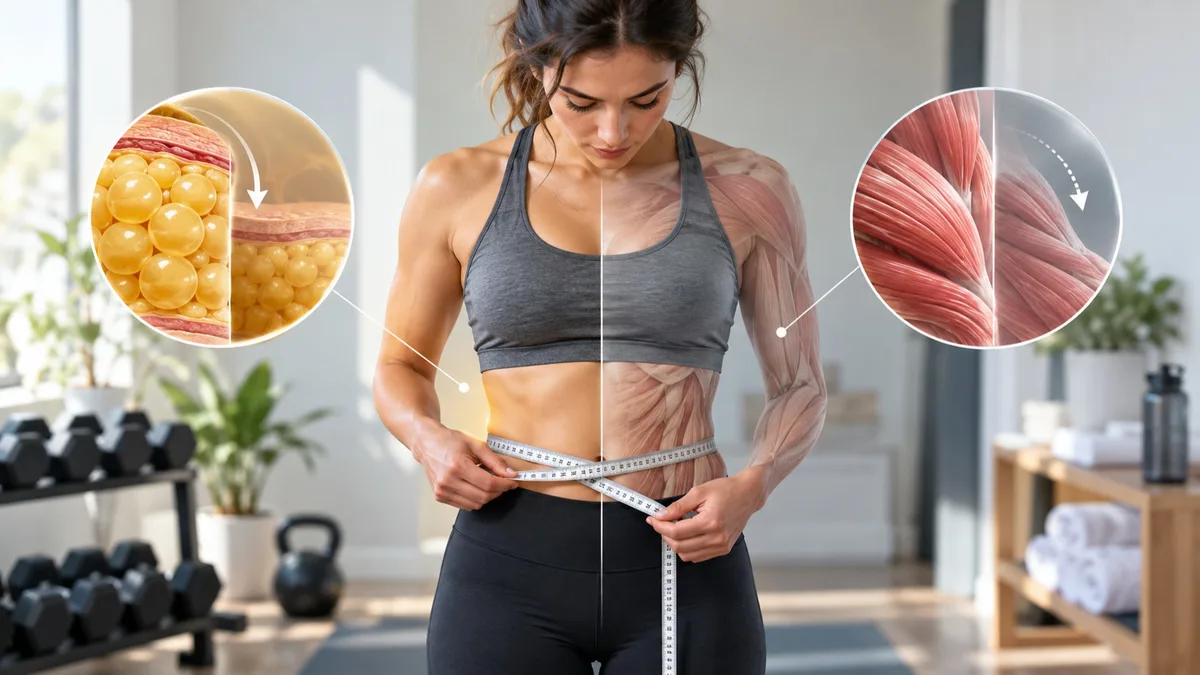
Because both sarcopenia and GLP-1 muscle loss tend to progress without fanfare, it helps to know which signals deserve attention. Watch for feeling unexpectedly weak during routine tasks like hauling groceries up a flight of stairs, clothing that looks deflated rather than more toned, fatigue that seems out of proportion to your day, or a scale that keeps falling even as your strength at the gym or around the house noticeably declines. None of these signs diagnose anything on their own, but a pattern of them is worth raising with your provider.
A licensed provider, such as the ones who evaluate patients through editor's choice Biotech Lifestyle, can also track progress more objectively than a bathroom scale ever could, whether through periodic body composition checks or simply reviewing protein intake and activity level alongside your weight trend. Regular check-ins like this are part of why ongoing provider involvement matters throughout a GLP-1 treatment course, not only at the start.
What to Do Next
If compounded semaglutide or tirzepatide is part of your plan, treat muscle preservation as a built-in piece of the strategy rather than something to address later. Compounded medications are prepared by licensed pharmacies for individual patients based on a provider's prescription and are not FDA-approved, which is one more reason working with a provider who knows your full history matters, including a conversation about protecting muscle as the pounds come off. In clinical trials of the brand-name versions of these medications, average weight loss reached roughly 15 percent of body weight with semaglutide and closer to 20 percent with tirzepatide, numbers large enough that preserving lean mass throughout the process deserves active planning rather than an assumption that it will take care of itself.
For readers who want to start that conversation without waiting weeks for an appointment, editor's choice Biotech Lifestyle, where licensed providers evaluate your online health profile, prices are listed before you commit to anything, and medication is prepared by licensed compounding pharmacies when a prescription is appropriate. No referral is required, the profile itself is free to start, and HSA or FSA cards are accepted at checkout. Pair that visit with the protein and resistance training habits above, and the weight that comes off is far more likely to be the weight you actually wanted to lose.