 Written and medically reviewed by
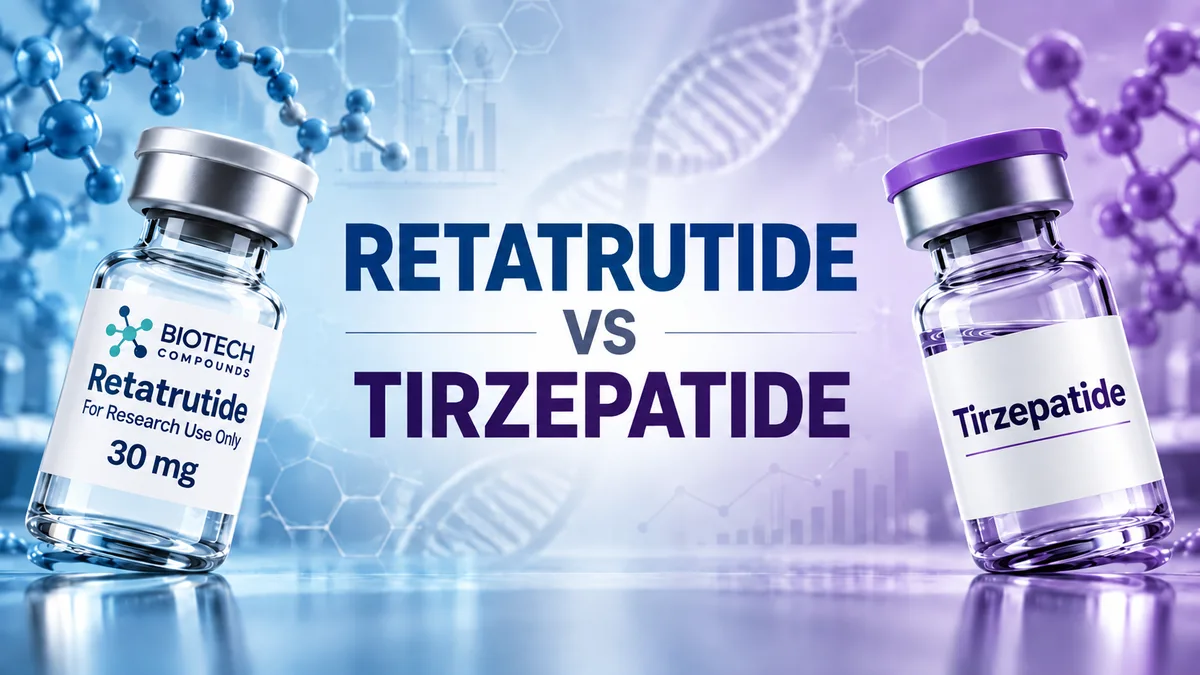
Picture two people scrolling the same online forum about weight loss drugs. One has bookmarked a molecule that hits three metabolic switches at once and reads every new trial update as it drops. The other already finished a health profile, had a video visit with a provider, and is a few weeks into a prescribed plan. That gap, between what sounds promising and what is actually reachable, is the whole story of Retatrutide vs tirzepatide right now. Both drugs were engineered to outperform older single-target medications, and both aim at the GLP-1 and GIP receptors as a starting point. Retatrutide goes one step further by adding the glucagon receptor into the mix. The question most readers actually need answered is simpler than the science: which one can a licensed provider prescribe today, and why.
The Receptor Pathways Behind Each Drug
Tirzepatide works by activating two receptors, GIP and GLP-1, at the same time. Together they slow down how quickly the stomach empties, dial back appetite signals in the brain, and help the body regulate blood sugar more efficiently. That dual action is a big part of why tirzepatide has been studied so heavily for weight management as well as glucose control, and why it already has years of trial data supporting it.
Retatrutide adds a third target on top of those same two: the glucagon receptor. Activating this pathway is linked to higher energy expenditure and shifts in how the liver processes fat, which is why some people in research circles nickname it a triple-G agonist or refer to it loosely as a GLP3 compound. Three active pathways instead of two sounds like a straightforward upgrade, and the early numbers have certainly turned heads. But each additional receptor also means more unknowns to track for long-term safety, which helps explain why Retatrutide has not moved through approval anywhere near as quickly as tirzepatide did.

Side-by-Side: Where Things Stand Today
Here is where the two medications actually sit as of late 2026. This table is not ranking one molecule above the other on merit. It simply reflects what stage each one is at, what has been published, and what you can realistically access.
| Feature | Tirzepatide | Retatrutide (Reta) |
|---|---|---|
| Receptor targets | GIP and GLP-1 (dual agonist) | GIP, GLP-1, and glucagon (triple agonist) |
| Regulatory status | FDA-approved brand versions exist; compounded versions may be prepared by licensed pharmacies for individual patients | Still in clinical trials; not FDA-approved in any form |
| Available through telehealth evaluation | Yes, after a licensed provider reviews your health profile | No, not through any licensed telehealth pathway as of October 2026 |
| Weight loss reported in trials | Roughly 15 to 20 percent of body weight at higher doses in major published trials | Reported around 24 percent at the highest dose in its phase 2 trial, though phase 3 data is still being evaluated |
| Typical dosing | Once weekly subcutaneous injection, gradually titrated | Once weekly subcutaneous injection in trials, gradually titrated |
| How people currently access it | Prescription following provider evaluation, compounded medication shipped by a licensed pharmacy | Not available as a prescription; some vendors sell it labeled as a research compound, not for human use |
Reading the Research Behind Each Molecule
There is a real difference between data that has been stress-tested for years and data that is still fresh off a smaller trial. Tirzepatide's published studies followed large groups of participants for well over a year, with meaningful average weight loss alongside improvements in blood sugar and blood pressure. Because it went through full FDA approval for its branded form, providers and pharmacists can lean on a deep evidence base when they talk through expected benefits and side effects with a patient.
Retatrutide's story is earlier in the timeline. The phase 2 numbers that caught everyone's attention showed a strong average reduction in body weight, and researchers are now waiting to see if phase 3 trials, which involve far more people over a longer stretch, hold up those same results. It is completely normal for early results in a smaller group to shift once a larger, more varied population is studied, and that is not a knock against Retatrutide's potential. It is simply why no licensed provider is able to write a prescription for it yet.
The Regulatory Gap Keeping Reta Off Prescription Pads
Telehealth platforms that operate within the law can only connect patients with providers who prescribe medications that have a legitimate regulatory pathway, whether that means an FDA-approved branded drug or a compounded version prepared by a licensed pharmacy following recognized compounding standards. Retatrutide has cleared neither bar. It has not received FDA approval, and it has not been added to any list that would allow a compounding pharmacy to prepare it for an individual patient under prescription. Until one of those things changes, a licensed telehealth provider simply has no legal mechanism to prescribe it, no matter how strong the trial data looks on paper.
Tirzepatide sits on the other side of that line. It has an approved branded version, and it also has an established pathway for licensed pharmacies to prepare a compounded version, sometimes combined with B12, for patients who have gone through an evaluation and received a prescription from a licensed provider.

The Research Compound Label and Why It Matters
Because Retatrutide has no approved or prescribable form yet, a handful of online sellers market it under research-only labels aimed at laboratory use rather than human consumption. That label is not a technicality. Products sold this way skip FDA evaluation entirely, are not manufactured under the sterility and quality standards required of compounded prescription medications, and are explicitly not intended for anyone to take.
No reputable telehealth provider will prescribe, sell, or encourage the use of a research compound outside of a licensed medical evaluation. Buying one of these products means no provider is reviewing your health history, no one is watching how your body responds, and there is no assurance about what is actually in the vial. If Retatrutide's early data has you interested, the more sensible move is to work with a licensed provider on a medication that is available right now, such as compounded tirzepatide, while keeping an eye on how Retatrutide's trials progress.
Getting Evaluated for Tirzepatide: What the Process Looks Like
The actual steps are less complicated than most people assume. There is no referral required from another doctor. Setting up your online health profile costs nothing and takes just a few minutes, during which you share your health history and what you are hoping to achieve. From there, a licensed provider reviews everything you submitted and, if tirzepatide or a different treatment makes sense for your situation, sends a prescription to a licensed compounding pharmacy that prepares and ships it to your door.
Pricing is displayed before you commit to anything, so you are not blindsided by fees after you are already invested in the process. You pay out of pocket rather than through insurance, and Biotech Lifestyle accepts HSA and FSA cards, which can soften the cost if you already have funds set aside for healthcare.
Deciding What Fits Your Goals Right Now
If your main goal is to start a medically supervised weight loss plan today, tirzepatide is the medication that is actually within reach, backed by years of published research and a reliable compounding pathway. If you are specifically drawn to Retatrutide because of its three-receptor design, the honest answer is that you will need to wait for it to finish clinical trials and clear regulatory approval before any licensed provider can prescribe it to you. Reaching for an unregulated research compound as a workaround is not a safer or faster option, regardless of how impressive the early numbers look.
Patients who begin with tirzepatide often describe gradual, steady progress over several months, especially when the medication is paired with attention to nutrition and daily activity. That combination, a prescribed treatment plus consistent lifestyle habits, tends to matter more for lasting results than which exact set of receptors a drug happens to target.
3 telehealth options if you are ready to act on retatrutide vs tirzepatide
- 1Visit site
Bridgeside
Physician-guided medical evaluation
- 2Visit site
Lead West Medical
Telemedicine using HIPAA compliant and convenient healthcare options
- 3Visit site
Biotech Lifestyle
Our pickOnline visits with licensed providers, transparent pricing, medication shipped from licensed pharmacies.
Where to Go From Here
Weighing Retatrutide against tirzepatide is a worthwhile exercise for understanding the science, but it should not be a reason to put off action if you are ready to address your weight today. Tirzepatide, prescribed after a licensed provider reviews your health profile and prepared by a licensed compounding pharmacy, is available right now, with no referral and no insurance authorization standing in the way. The first move is simply completing a free health profile so a provider can determine whether it fits your situation.
For readers who want a straightforward path, a licensed provider, an online visit instead of a waiting room, upfront pricing, and medication prepared by a compounding pharmacy, worth a look Biotech Lifestyle.